Sunday, November 14, 2010

Banned

I very much understand that there are many different ways to teach math well. I see other teachers sometimes and think, "WOW... but I could never do that." It's often a matter of personal style and most importantly, assessing and meeting the needs of your specific kids. Somewhere in all of that, however, are best practices that we (should) learn in ed school or from each other. In the same vein, there are many different ways to teach math poorly. Somewhere in all of that are what you might call anti-best practices, certain ways of teaching that do more to harm student learning than to support it. Besides all the "teacher moves" that don't work, there are some content-specific anti-best practices I've seen over the years that make me want to pull my hair out every time a kid mentions one.

The following is a list of phrases, algorithms, and "tricks" that I wish would be banned from every math class.

Cross Multiplication
Cheers to the genius who decided that it would really help kids to draw a big X through an equals sign and multiply the numbers on the ends. Yes, cross multiplication "works" in the case of a straight proportion with one unknown, but that's a very specific case. Kids like cross multiplication because it's easy to remember (although the dividing at the end gets confusing), but what they don't remember is when you should actually use it. Try this experiment if you have a middle schooler or high schooler handy: if they remember cross multiplication, then give them three problems, one where two fractions are set equal to each other, one where the fractions are added, and one where they are being multiplied. You'll be amazed at how many kids draw an X on all three problems. This is so common that my lesson on cross multiplication (and why you're not allowed to use it in my class unless you can explain to me why it works) is based on someone raising their hand and making this mistake. And it always happens. Kids don't understand why it works, so they don't know how or when to use it.

One of the biggest things I want my students to learn from my class is that math and math steps should always make sense. I teach them "fraction busters" which is essentially a long version of cross multiplication. Fraction busters involves multiplying by all the denominators in an equation in order to "bust" the fractions and get something more reasonable to work with. I push my kids to say that we're multiplying because fractions are division and we want to undo the division by doing it's opposite. If there's a reason behind their math steps (besides "It's what my old math teacher taught me") then there's a very good chance that they're doing something right, and an even better chance that they'll understand how to fix it if it's wrong.

Fun story: last year another math teacher and I literally sprinted across the school trying to find the algebra teacher to make sure he didn't teach cross multiplication. I like to think it was like a movie when Maura found him, that she busted through the door (no pun intended) and dove in slow-motion to knock the whiteboard marker out of his hand before he could draw an X through the equals sign.

"Cross Cancel"
Honestly, I don't even know what this means, but it always comes out of some kid's mouth when we're talking about fractions. I think it has something to do with multiplying and simplifying fractions? In any case, if I don't know what it means and kids can't explain it to me, it's obviously not helping them learn. It's just another "rule" that has no sense-making behind it, so kids mess it up.

FOIL
Oh, binomials, the way you torture Algebra I students is amazing. FOIL (first, outer, inner, last) is definitely the way I learned how to multiply binomials and definitely the way I continued to do it until a couple of years ago. Again, this is another "rule" that kids don't understand the reasons behind. It's a little harder to mis-apply  than something like cross multiplication, but it's detrimental because it's extremely limiting. I was a good math student, and I definitely did not understand for a very long time how to multiply a binomial with a trinomial (let alone larger polynomials) because it didn't fit the FOIL pattern. Another significant issue is that because FOIL has no logic behind it, there's no logic to un-FOILing AKA factoring, which is consistently one of the most difficult topics in Algebra I.

The solution? The best way I've ever seen this taught--and what I continue to use--is an area model. Here are some examples:

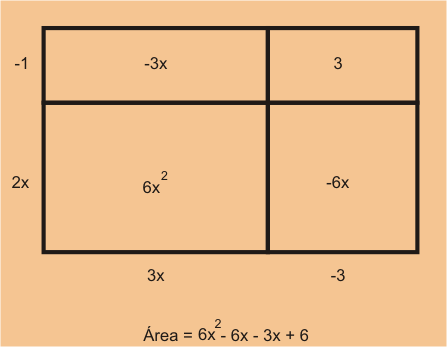
They make a lot more sense to kids, and work well for any kind of multiplication of polynomials because you can make the generic rectangles any size. They also make factoring unbelievably easier. Learning about generic rectangles was life-changing for my own mathematical understanding and for the way I teach algebra.

"A negative and a negative is a positive"or "A negative and a positive is a negative."
What's the key word in these phrases? Oh, there isn't one because it's completely ambiguous. What does "and" mean? To make these "rules" correct, "and" should mean "multiplied or divided by" but of course kids don't remember that. You'd be amazed at how many kids think -5 + 10 is either -15 or -5. Multiplication of positive and negative numbers gets a little more complicated with regard to the sense-making aspect--can YOU explain why two -5 x -5 = +25? But the sense-making around adding positive and negative numbers is not difficult, so if we can at least start there hopefully there will be less confusion with multiplication/division.

a^2+b^2=c^2
No, I don't want to get rid of the Pythagorean Theorem. But who thought it was a good idea to name the sides of the triangle a, b, and c? How do those help, especially when it doesn't matter which of the legs is a and which is b? I got a semi-angry email from another math teacher this year asking why we'd teach it that way. The answer: I don't. I teach it by first looking at the geometric representation, so I want the kids to be able to verbalize something like, "The areas of the two smaller squares add to equal the area of the bigger square." Algebraically, I teach it as "Leg^2+Leg^2=Hypotenuse^2".

"Cancel out"
Another terribly ambiguous phrase. Kids love crossing things out (who doesn't? It feels so satisfying), so they love saying that things cancel. But "canceling" is another word that means nothing, at least when it comes to sense-making and giving reasons. We teach that adding and subtracting from both sides of an equation is "making zeros." Simplifying a fraction is "making ones." Squaring and square roots "undo each other." Because that's exactly what's happening. Math isn't magic, so numbers and symbols shouldn't just vanish with no explanation. If kids can make sense of these very fundamental identities, they're set up to understand all kinds of algebraic manipulation and solving, as well as new operations and their inverses. And kids still get to cross stuff out.

There are two main ideas behind this post:
1. For kids to effectively learn math, it has to make sense. Seemingly arbitrary rules do not help them make sense of anything and only serve to deepen their belief that math is some confusing, magical subject that's only accessible to a select few.
2. Unlearning a misconception is exponentially more difficult than learning something right in the first place. And what's tricky is that misconceptions are often applied in a way that gets a correct answer. So kids who I meet in 9th grade who have been cross multiplying for 2-3 years get frustrated because they've been able to solve all these proportions correctly, not realizing that the other ways they've been applying it are where the real problem is.

I'm not completely innocent regarding all the anti-best practice above. I did teach things that way or would have taught them if I'd never seen an alternative. It makes me wonder what else I'm doing wrong that's driving upper-level teachers crazy...

Monday, November 01, 2010

Spirit Week 2010

Pictures, as promised. First, crazy hair day. It's hard to see well in these pictures, but my quasi-mohawk/stegosaurus impersonation was quite the hit. The flowers were a last-minute addition in the morning that I'm glad to have made. There were only two problems: first, by the end of the day I had a terrible headache, which I eventually realized was from having my hair pulled so tightly for 9 hours. Second, I had to meet with a parent in the afternoon, which I was prepared for by choosing a hairstyle that could be undone (unlike my colleague Lisa, as you can see below). But in all the rush of after-school meetings, there was no time to turn myself into someone who you'd trust with your child so the whole meeting was kind of awkward. I hope that the kid explained to his mom that his teachers don't usually look like that.


Now on to the really good ones: Halloween. I am extremely proud to be part of a math department that came up with such phenomenal costumes. As I have chronicled, math costumes are not easy to come up with. There was some serious costume competition from the English department where all the women dressed as different Lady Gagas and the one man was "Alejandro," but I think our department wins on (1) creativity, (2) bad humor, (3) incorporation of academic content. Let's be honest: our department is by far the most fun and it's no coincidence that we often have the highest happy hour turnout and usually dominate faculty team-building competitions. Halloween is just reflective of our awesomeness.

I'll let you guess the bad math jokes. Zoom in to see if the math I'm wearing gives you a hint. 


To narrow it down, here are a few of the things that my students (incorrectly) guessed:
- The Monopoly guy
- A mathematician
- Calculus
- Pythagoras (clearly I did not convey very well that he was from ancient Greece)
- "Jersey Shore" (relevant, but still misses the mark)

Below is the rest math department. Don't bother guessing on Kieran, the tall guy in the middle (he doesn't get into the math department bonding with the rest of us) or Mark, the one on the far left (he didn't seem to understand until Friday morning that the rest of us were in math-related costumes). The rest are brilliant.

 
Here are your mathematical hints:
- Julian (2nd from the left): inverse of e^x
- Maura (sunglasses in the middle): the reason why correlation does not necessarily imply causation
- Trevor (standing next to me): (r, theta)

See below for answers:


From left to right:
- Mark (doesn't count as a legitimate math costume): "math-magician"
- Julian: Natural log
- Maura: Lurking variable (there is a better picture somewhere where she is lurking in the corner while the rest of us take a group picture)
- Kieran (5,000 points if you got this one right): Mr. Johnson, our school's physics teacher
- Trevor: Polar coordinates
- Me: Tangent (a Tan Gent)

I love Halloween. Except that the scariest thing alway seems to be how little math people know.

Tuesday, October 26, 2010

Cross Dress Day

This week is Spirit Week at school, one of my favorite events of the year. I love ridiculous costumes for any reason, so Spirit Week gives me five days worth of entertainment. Plus, how can you pass up wearing pajamas to work? (BTW, if anyone finds good/awful footy pajamas, I'm in the market). Pictures coming at some point--I have to say I'm proud of what I came up with for Crazy Hair Day.

When the Social Committee announced themes for each day, Wednesday was listed at "Cross Dress Day." That did not sit well with me at all. The whole reason why Spirit Week is fun is that you get to wear things that oppose convention--Pajama Day is fun because generally we don't wear pajamas outside our homes; my quasi-mohawk made kids laugh today because it's so far from my usual  hairstyle. My worry with Cross Dress Day is the implied message that (1) gender should dictate the way we dress and (2) dressing contrary to gender expectations is not only frowned-upon on a normal day, but is actually something that we should consider funny or silly. I have no idea if we have any transgender students at our school, but I imagine that if you're already restricted from expressing your identity through your appearance (which could be anyone, not just transgendered students), you don't need a school-sponsored reminder that the way you want to look/feel is a joke.

I brought this up with some other faculty members, who seemed to agree that Cross Dress Day sends the wrong message. We agreed that we'd never have a "Dress Like Another Race Day," an analogy that in my mind is pretty applicable. Word was passed down to the Social Committee faculty sponsor that Cross Dress Day needed to be replaced. And it was. Tomorrow is Sports Day (go Giants!). Problem solved.

However, I'm worried that the reasons for the change was poorly communicated to the students. Many students seemed to think that it was because the teachers were opposed to the act of cross-dressing in itself, which is the exact opposite of why we (or at least I) thought it should be canceled. I tried to explain to my advisory that saying that we need a special day when it's okay to dress like the opposite gender means that on normal days it wouldn't be okay to do this. It should be okay for a boy to wear a skirt on any day the year. I'm not sure how much they understood, but they seemed to calm down when I told them that I'm not against cross-dressing.

The more difficult thing is that after talking with some other faculty members today, I'm not sure they understood my view. When I explained that supporting Cross Dress Day also supports the idea that men and women should dress a certain way, one teacher responded that most people do believe in those gender expectations. Luckily he caught himself in his faulty logic, but I was ready to list off all the other things that "most people believe" that we probably shouldn't be supporting. This teacher also told me that I should be okay with Cross Dress Day because his gay students were excited about it. I didn't know where to start on this one--would it be better to talk about the difference between gender and sexuality? To explain how people can contribute to their own oppression? To remind him that the opinions of a few people within an identity group do not represent the group as a whole? Sometimes talking to educated, well-meaning adults is much more frustrating than talking to teenagers.

On the other hand, I have to wonder whether I'm overreacting. I think back to the openly transgender student I had when I was student teaching--would he have felt uncomfortable with Cross Dress Day or would he have welcomed it as an opportunity to finally dress like he so desperately wanted to? Even in the latter case, does is that enough to negate the message that cross-dressing should be considered abnormal? Is it better for that kid to have one day where he can wear what he wants under the pretense of it being a joke, or for him never to even have the opportunity to be that joke? Will the presence of kids in gender-bending clothing once a year eventually have the effect of making it acceptable on other days?

On a semi-related note, I recently read this article in Vibe about the dress code at Morehouse. It's an interesting question of what is "appropriate attire" for a scholarly environment and what happens to gender norms in a single-gender setting. I wonder what the men in this article would have to say about Cross Dress Day.

Sunday, October 24, 2010

We Lived this Picture

http://travel.nytimes.com/2010/10/24/travel/24galapagos.html?pagewanted=2

The NY Times probably had a slightly better camera, but really it doesn't look that different from all of my pictures.

Also: when I opened up this article, the ad on the side was for New Zealand tourism. Has targeted marketing gotten that good (i.e. is Google selling the contents of my email/brain?), or is the universe just trying to remind me of all the things I'm not doing at the moment? It's usually this time of year when I start daydreaming and looking up plane tickets. In case you were wondering, winter break tickets to Auckland are currently out of my price range. I haven't searched prices to Ecuador. Yet.

Friday, October 08, 2010

Yolo of the Month: September #2


Inspired by our boating adventure this summer and aided by the wonders of Groupon, Maura and set out a few weekends back on our very first sailing lesson. We were rewarded with stunningly beautiful day with sun so warm and wind so mild that we didn't need the fleece jackets and long-sleeve layers we'd so diligently prepared.

Seeing the Bay from a boat is by far my favorite way. I love the San Francisco skyline and all the bridges set against sparkling blue water.


There was, theoretically, a little bit of a sailing lesson in all of this. Here's Maura tacking and generally aiding the movement of our boat. I think that this was the tack that our captain called the best tack he'd ever seen. I'm sure he meant that. In general, I can't say I learned much actual sailing. In a rookie teacher mistake, our captain threw out a lot of words without explaining what they meant or how they related to sailing, which naturally made it difficult to understand what he was talking about. It's hard to watch out for the jib when you don't know what you're looking for.

We also both took turns at the wheel. I'm pleased to say that neither of us crashed into anything. Not that there's anything to crash into in the middle of a large body of water, but I'll take whatever victories I can get. There was one guy in our group who got yelled at when he was at the wheel because he was steering nowhere near close to where we were supposed to be going, so at least Maura and I did better than that.

The most exciting part of our day, at least according to our captain, was getting to watch this sailboat race. I fully admit that I don't know that much about sailing or racing, but I was not super-excited about this. However, the boats did look really cool.

Here's the play-by play:

First, we saw a large mass of boats. They weren't moving very fast. Our captain said that this probably means it's a race.

A speedboat takes the lead.
The boats start to turn. Our captain says that this is the most exciting part. Nothing really happens.

The boats have turned and now that they're going in the other direction they're all tilt-y. I really want one of the boats to tip over. Our captain says that this rarely happens. He is correct.

Maura and I go back to hanging out and enjoying the weather. This is a hobby I could get used to pretty quickly.

Yolo of the Month: September #1

Somehow in my life of doing nothing but teaching, I've found time for a few out-of-the-ordinary adventures. First up: eating. Every couple of months, a group called SF Food Wars hosts a cooking compeition based around some theme. Attendees get to sample the entries and vote for their favorites. September's theme: salsa. So we spent a lovely Sunday afternoon outside the Ferry Building dipping chips into 23 different types of deliciousness.

The first plate (clockwise from the blue corn chips): "Peas and Hominy Salsa," "Peach-o de gallo," "Salsa La Cabana" (very tomato-y), "Ow-wesome Habanero Salsa."


Candice and Morgan take their first bite. The verdict: keep moving so we can taste everything. Twice.

Some of the teams, including "Macho Madness" (with the mustaches), who were probably the cutest team; "Salsa en Fuego," made completely with veggies purchased from the Ferry Building Farmer's Market the day before; "Team Bodacious Beetliciousness" (whose salsa wasn't my favorite, but it was pretty and I liked their idea); and "Eat This Mexican," the winners of the people's choice award. They got my vote.


Sarah liked the Eat This salsa so much that she asked for a t-shirt. She recognized greatness before they were announced as the winners. The guys were also kind enough to package up a tupperware of their delicious creation for us to take home.

I never knew that it would be possible to completely stuff myself on chips and salsa. Here we are surrounded by our graveyard of empty plates and salsa cups. Morgan's face reflects our conflict of wanting to eat more, but not really being able to stomach it (pun intended).

Wednesday, October 06, 2010

Extra Credit

Today is the first Geometry test of the year. The first bonus question: "What is Ms. L.'s last name? Spelling counts!"

Out of 110 students...
-How many will even attempt the question?
-How many will get it right?

Place your bets now!